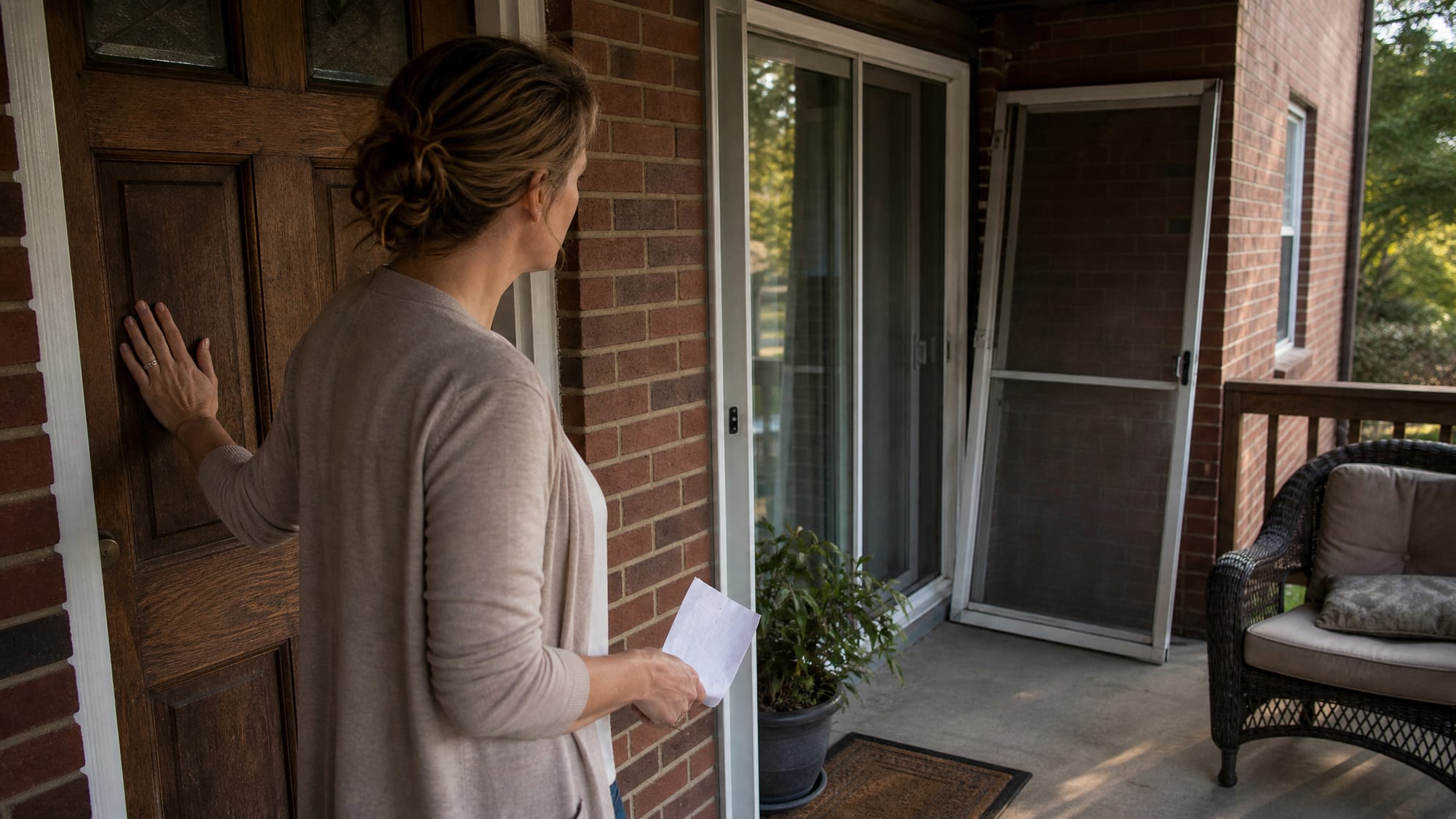


You searched “front door replacement cost,” a quote landed on the counter, and the number’s bigger than you pictured. Then you read down a line and there it is: the install costs almost as much as the door. And the salesman’s “premium” quote is thousands over the one before it.
Here’s the honest version from someone who sells and measures these: you searched the door, but the quote is charging you for the whole doorway — the labor, the seal, the threshold, and whatever’s hiding under the old sill. The slab is only part of the number.
What does a front door cost to replace in NC? Broadly — all national bands, verify locally — ~$1,200–$8,000+ installed. A basic steel prehung runs ~$1,200–$2,200; upgraded steel or fiberglass ~$2,200–$3,800; a premium fiberglass door with decorative glass, sidelights, and a transom ~$3,800–$8,000+. A bare, no-scope swap into a sound frame can dip to ~$500–$2,000. The real movers are the glass package, the labor, prehung-vs-slab, and any hidden sill rot — not the brand on the box. And a front door is one of the rare projects that tends to pay you back at resale.
Cost figures here are broad national bands, not an NC quote. Last reviewed July 2026.
What a front door costs by material
Steel is the lowest floor, fiberglass carries the premium, and wood spans both — but the material moves the number less than the glass and the install do. Here’s the by-material map, cost-first.
I won’t re-argue steel vs fiberglass vs wood here — the security, dents, humidity, and R-value trade-offs live on the entry-door buying guide and the fiberglass-vs-steel breakdown. This page is about the number.
| Material | Typical installed range | Best for (the cost view) |
|---|---|---|
| Steel | ~$1,200–$3,800 | The lowest entry price, a covered entry, and — this is the surprise — the strongest resale return |
| Fiberglass | ~$2,200–$8,000+ | Exposed NC walls, near-zero upkeep, and the premium glass, sidelight, and transom looks |
| Wood | ~$500–$5,000+ | The look, under a real overhang, if you'll keep up the refinishing |
Steel
- Typical installed range
- ~$1,200–$3,800
- Best for (the cost view)
- The lowest entry price, a covered entry, and — this is the surprise — the strongest resale return
Fiberglass
- Typical installed range
- ~$2,200–$8,000+
- Best for (the cost view)
- Exposed NC walls, near-zero upkeep, and the premium glass, sidelight, and transom looks
Wood
- Typical installed range
- ~$500–$5,000+
- Best for (the cost view)
- The look, under a real overhang, if you'll keep up the refinishing
Read the quote down to a single installed number — old door pulled and hauled off included — before you set two materials side by side. That’s the only way the ranges above mean anything against a real bid.
What actually drives the price
Four levers move a front-door number far more than the slab material does: the glass, prehung-vs-slab, the labor, and any hidden sill rot. Biggest surprises first.
- The glass package. A solid door and a door with two sidelights and a half-round transom aren’t the same job. Decorative and textured glass adds cost fast, and sidelights add framing and sealing on both sides.
- Prehung vs slab. A prehung unit — door already hung in a new frame — costs a bit more to buy but installs faster and truer. A slab-only swap is cheaper up front but finickier labor, and it’s off the table if the frame’s gone.
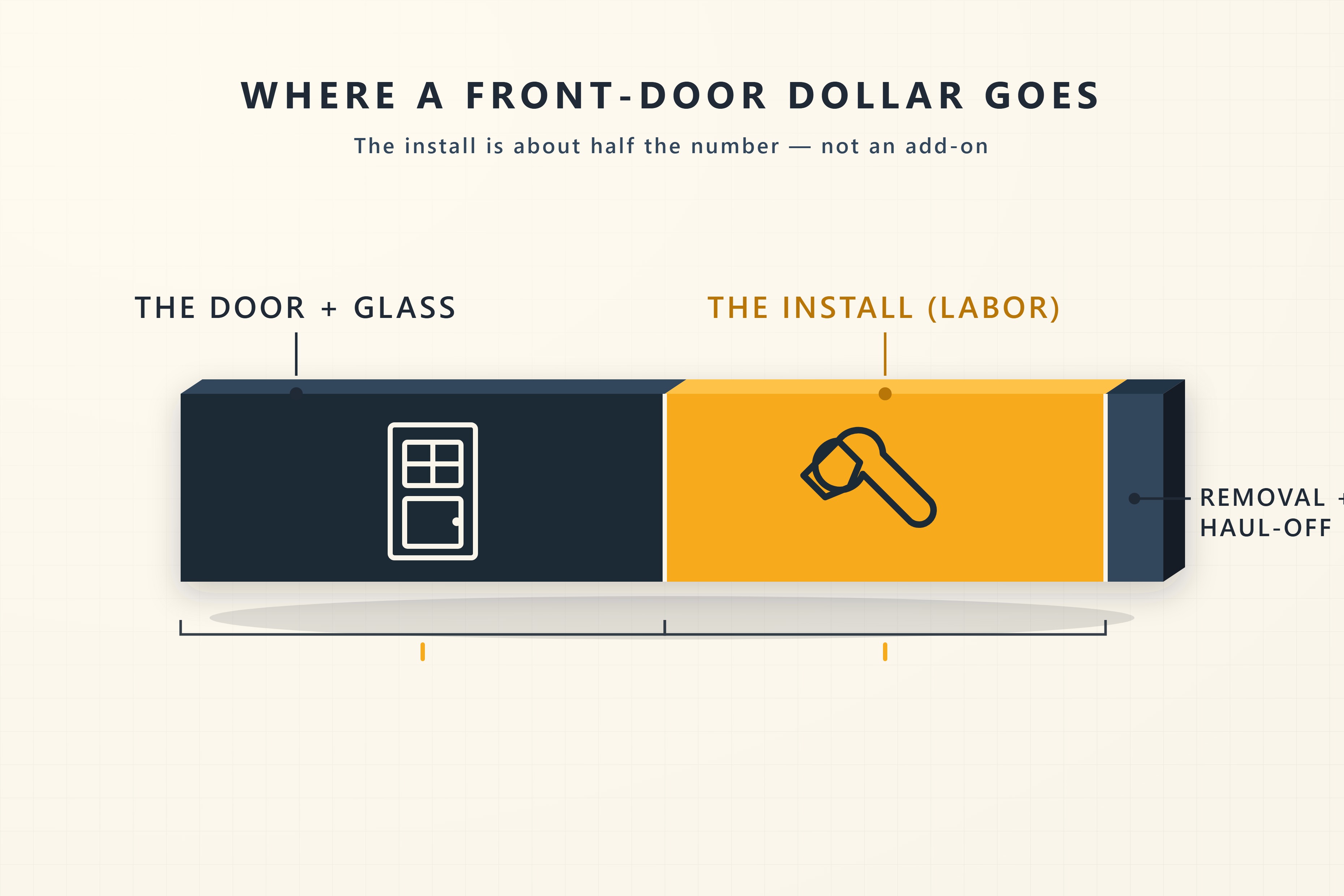
- The labor. On a front door the install is roughly half the total. It’s the part that decides whether the door drafts, sticks, or leaks.
- Hidden sill or jamb rot. If the structure under the threshold is soft, you fix it before hanging anything — the single biggest surprise mover. The sill-pan detail that quietly rots an entry is told in full on the buying guide.
North Carolina’s wind-driven rain makes that last one common here, and it’s exactly the line a rock-bottom quote leaves out. A door that’s cheap because it skips the rot check isn’t cheaper — it’s the same bill on a delay.
Why the labor costs almost as much as the door
On a front door, the install is about half the bill — sometimes more — and that’s not padding, it’s the half that makes the door work. This is the number that blindsides almost everyone.
Homeowners anchor on the door’s sticker, then find the install line right under it and feel worked. But a rough trade rule of thumb is labor at least 1.5 times the cost of the material.
You’re paying for the old door pulled and hauled off, the new unit set plumb, level, and square, the threshold sealed and back-dammed, the weatherstrip and sweep adjusted, and the strike and lock set right.
And the labor isn’t a fixed figure. A clean set into a sound opening is one number; the moment the crew opens it up and finds a rotted sill or an out-of-square opening, the hours climb.
That uncertainty is why two honest quotes on the same doorway can still disagree. It’s also why the reassurance the home forums always land on holds up: get two or three itemized quotes, and if they cluster in the same neighborhood, that neighborhood is the price.
Prehung vs slab: which is cheaper, really
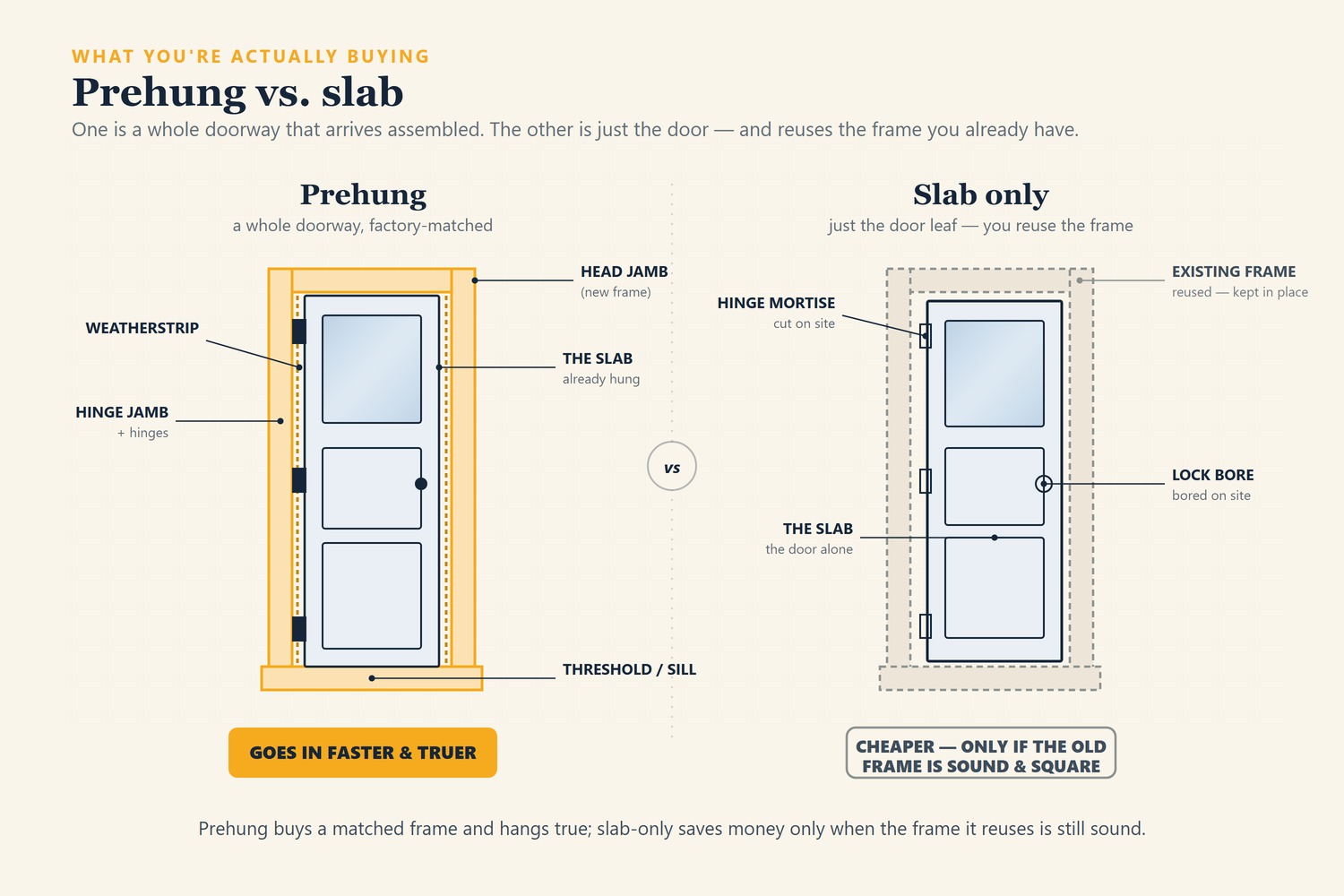
A slab-only swap is cheaper to buy but finickier to install; a prehung unit costs a little more but goes in faster and truer — and if the frame’s rotted, prehung (or full-frame) is your only real option. This is the choice the sticker never explains.
A slab is just the door — no frame. You reuse the existing jamb, hinges, and threshold, and the installer cuts and mortises the new slab to match. Cheaper materials, more skilled labor, and it only works if the old frame is sound and square.
A prehung door arrives already hung in a new frame with the jamb, threshold, and weatherstrip assembled. It buys a bit more up front but installs faster and lands truer, because the door and frame are matched at the factory.
On most replacements where the old frame has seen decades of NC weather, prehung is the honest value. You’re not gambling the new door’s fit on a tired frame.
The one time slab-only clearly wins: a sound, square frame and a door you just want to change out. Everywhere the sill or jamb is soft, it’s a full-frame job — no slab swap saves that.
Is a new front door worth it at resale?
Here’s the pleasant surprise on a page full of sticker shock: a front door is one of the few remodeling projects that tends to hand most of the money back. It’s the one line item that usually pays you.
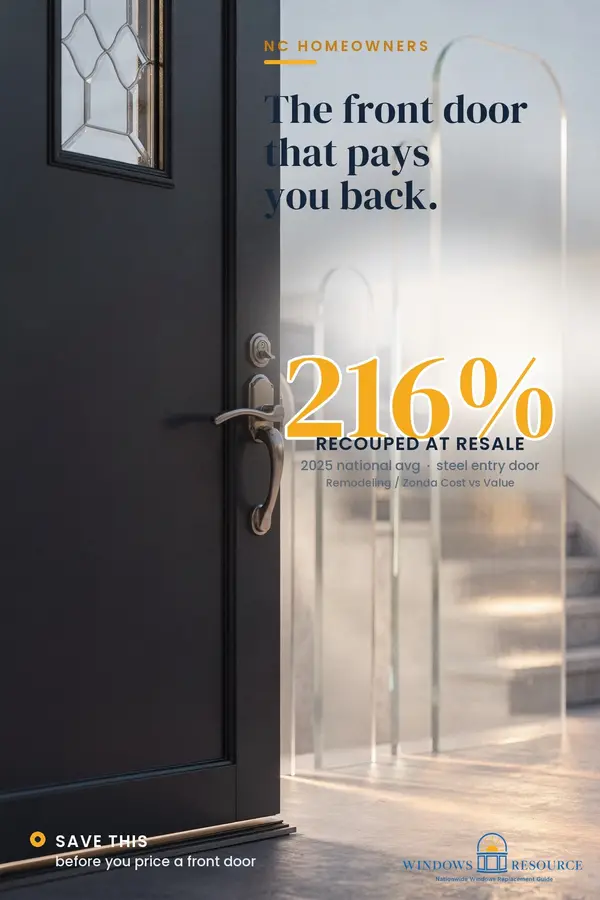
In the most recent national Cost vs Value report (2025), a steel entry-door replacement recouped an estimated 216% of its cost at resale — a national-average job cost of about $2,435 returning roughly $5,270 in resale value. That ranked it the second-highest-recouping project in the whole report, behind only a garage door.
In the South Atlantic region that takes in NC, it ran a touch higher, near 219%.
A fresh, well-hung front door is the first thing a buyer sees, and it reads as “this house is cared for” before anyone steps inside. That curb-appeal payback is why it lands so high.
I won’t hang a decision on a resale percentage, and neither should you — the figure moves every year and depends on your market. But it reframes the sticker: unlike most of what you spend on a house, a front door is one you’re likely to see again when you sell.
How to read the number on your quote
A range tells you whether a quote’s in the right ballpark; it can’t price your doorway. That depends on the door, the glass, prehung-vs-slab, and whether the sill’s hiding rot none of us can see from a chart.
So do the thing the forums always circle back to, because it works: get two or three itemized quotes, read each one down to a single installed number, and check what’s actually bundled — the door and glass, removal and haul-off, prehung or slab, the lock package, and what happens if they open it up and the sill is gone.
If the honest ones cluster, you’ve found your price.
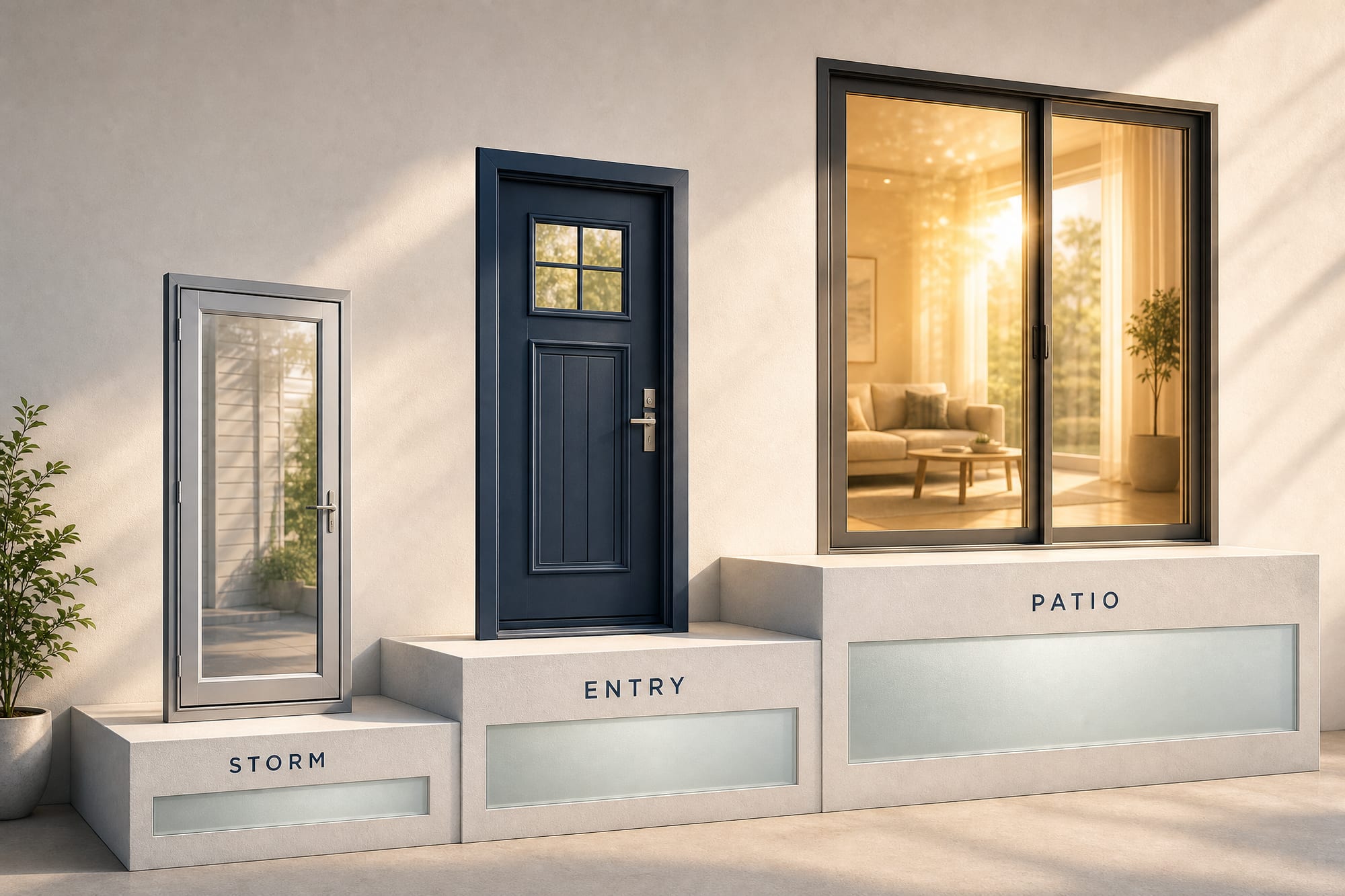
For the full three-door-type cost map — how a front door stacks up against a storm door and a patio door, and why pricing doors together saves on labor — here’s what new doors cost in NC. If you’re weighing the whole exterior, knowing what windows cost in NC puts the door number in context.
Got a front-door quote and you’re not sure the number’s fair? That’s exactly what a no-pressure second opinion is for — have me look at it. I’ll tell you which line items are real, what scope the price should include, and what a fair installed figure looks like for your doorway — then you decide.
Sources, Verification & Fact-Checking verified July 2026
Every load-bearing fact on this page is sourced and verified against a primary authority.
Verified July 2026 via direct review of the cited authority — the links open the controlling source so you can check it yourself rather than take our word.
- Installed front-door cost bands (~$1,200–$8,000+): basic steel prehung ~$1,200–$2,200; upgraded steel/fiberglass ~$2,200–$3,800; premium fiberglass with glass, sidelights, and a transom ~$3,800–$8,000+; labor ~$300–$470, more (~$500–$800+) if the frame/sill is rotted. This is the site’s authoritative installed spine (matches the doors hub and entry-door guide). Broad national estimates aggregated from 2025–2026 contractor cost guides, not NC quotes — NC labor and coastal/impact upgrades move them; verify locally before treating any figure as your price. (view source — ASP Windows, Average Cost to Install a New Door (2026))
- The lower “bare basic swap” floor (~$500–$2,000, and ~$957–$1,458 to install a stock exterior door in favorable conditions) prices a door-only or no-scope swap — a real low end, presented as such, not a contradiction of the higher installed spine. Frame condition is the pivotal variable in scope: a rotted sill/jamb forces a full-frame job (labor rises to ~$500–$800+), not a slab swap. (view source — Homewyse, Cost to Install an Exterior Door; view source — Homenetics, Replace an Exterior Door & Frame)
- On a front door the labor is roughly half the total (a common trade rule of thumb is labor at least 1.5× the material), and the install cost is not fixed — a rotted sill or out-of-square opening raises it. Labor covers the door pulled and hauled off, the unit set plumb/level/square, the threshold sealed and back-dammed, the weatherstrip/sweep adjusted, and the lock/strike set. (view source — ASP Windows)
- Prehung vs slab: a prehung unit (slab pre-hung in a new frame) costs a bit more to buy but installs faster and truer; a slab-only swap is cheaper to buy but more skilled labor (cut/mortise to the existing frame) and only viable if the old jamb and sill are sound and square. A rotted sill/jamb means a full-frame job, not a slab swap. (view source — ASP Windows)
- Resale return: in the 2025 national Remodeling / Zonda Cost vs Value report, “Entry Door Replacement (Steel)” recouped ~216% of cost — a ~$2,435 average job cost returning ~$5,270 in resale value — the #2-highest-recouping project nationally, behind only garage-door replacement (268%). The South Atlantic region that includes NC ran ~219% (~$2,398 cost, ~$5,253 resale). Live-fetched at fact-check directly from the primary source (2026-07-10); 2025 is the current published report. The figure shifts every year — the 2024 report ran an unusually high ~188% — so verify against the current-year report before banking on a number. (view source — Remodeling / Zonda, 2025 Cost vs Value, National Averages)
- Homeowner cost sentiment (attributed review-theme reporting): the recurring reaction on home-improvement forums is sticker shock at the install/labor share (“$1,800 for a straightforward install seems high”), reassurance that a scoped quote — sidelights, transom, Low-E, rot repair, paint — is often fair for the work, the wisdom that clustered itemized quotes reveal the real price, and DIY-install regret. Reported as a recurring pattern of homeowner discussion, not attributed to any one named thread, and never editorializing the trade.